

Rick Wakeman is one of the most recognizable keyboard players in the history of progressive rock. Best known for his work with the legendary band Yes, he has also enjoyed a successful solo career as a composer, recording artist, and performer. His unique ability to combine classical music with rock helped redefine the role of keyboards in popular music.
From playing sessions with David Bowie to releasing iconic albums such as The Six Wives of Henry VIII and Journey to the Centre of the Earth, Wakeman has built a remarkable career spanning more than five decades.
In this Rick Wakeman Biography, we explore his early life, education, musical career, famous albums, personal life, income sources, and estimated net worth.
Quick Facts About Rick Wakeman
| Detail | Information |
| Full Name | Richard Christopher Wakeman |
| Professional Name | Rick Wakeman |
| Date of Birth | May 18, 1949 |
| Birthplace | Perivale, Middlesex, England |
| Nationality | British |
| Profession | Keyboardist, Composer, Songwriter, Producer |
| Famous For | Yes and Solo Progressive Rock Albums |
| Music Genres | Progressive Rock, Classical, Instrumental Rock |
| Estimated Net Worth | $10 Million |
| Active Since | Late 1960s |
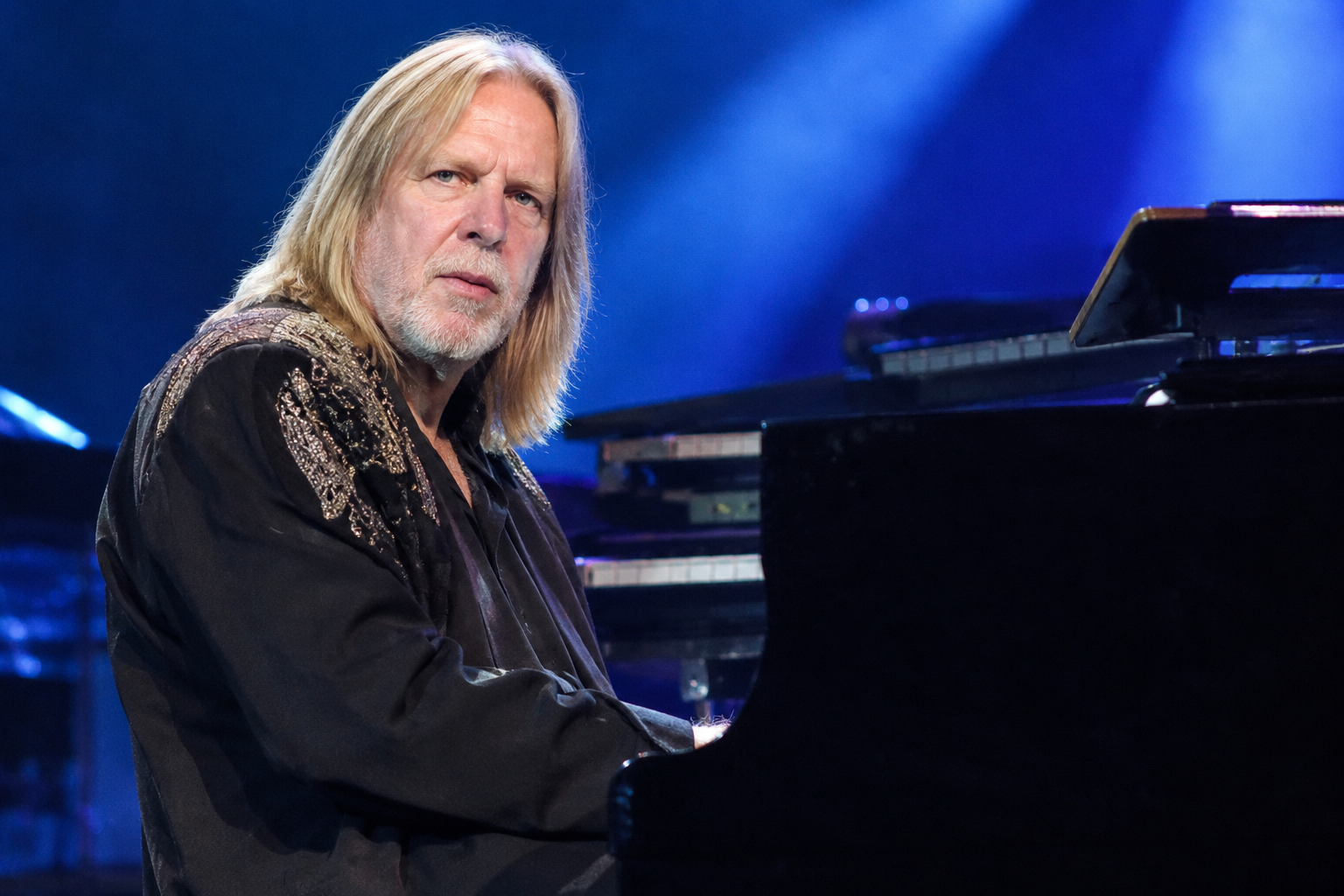
What Is Rick Wakeman’s Net Worth?
Rick Wakeman’s estimated net worth is approximately $10 million, according to Celebrity Net Worth. However, this amount is an unofficial estimate and has not been publicly confirmed through an audited financial statement by Wakeman or his representatives.
Rick Wakeman’s exact net worth has not been publicly confirmed, so available figures should be treated as estimates rather than verified financial statements.
His wealth is associated with a long and successful career in music. Over the years, he has earned income through album sales, music royalties, concerts, session work, television appearances, composition, and other professional activities.
Main Sources of Rick Wakeman’s Income
His publicly documented professional activities include:
- Music recording and album royalties
- Live performances and concert tours
- Session musician work
- Solo albums and musical projects
- Film and television music
- Radio and television appearances
- Books and autobiographical publications
- Professional collaborations with other artists
The exact amount he earns from each source is not publicly available. It would therefore be inaccurate to claim a specific annual salary or calculate his wealth from unverified financial figures.
Early Life and Family Background
Rick Wakeman was born Richard Christopher Wakeman on May 18, 1949, in Perivale, Middlesex, England. He grew up in West London and developed an interest in music from a young age.
His father, Cyril Frank Wakeman, and mother, Mildred Helen Wakeman, were part of his early family background. Music played an important role in his upbringing, and he began developing his piano skills during childhood.
Unlike many rock musicians who begin their careers with guitar or drums, Wakeman’s musical foundation was classical piano. He initially wanted to become a concert pianist, and his early training gave him the technical skills that later helped him become a leading progressive-rock keyboardist.
His classical background became one of the most important features of his musical identity. During the 1970s, progressive rock was becoming increasingly ambitious, incorporating orchestras, synthesizers, choirs, and extended instrumental arrangements. Wakeman was perfectly suited to this musical environment.
Education and Musical Training
Rick Wakeman attended Drayton Manor County Grammar School and later studied at the Royal College of Music in London.
Although he did not complete his studies at the Royal College of Music, his formal training had a lasting influence on his career. He left in 1969 to work as a full-time session musician.
His classical education helped him understand musical composition, harmony, arrangement, and performance. These skills later became essential to his work with Yes and his solo albums.
Rather than abandoning classical music, Wakeman combined it with rock and electronic sounds. This combination became one of the reasons he stood out from other keyboard players.
Rick Wakeman’s Career Beginnings
Rick Wakeman began his professional career as a session musician during the late 1960s. Before becoming famous with Yes, he worked with several major recording artists and developed a reputation for his versatility.
Session work allowed him to gain experience in different musical styles. He learned how to work with producers, recording engineers, singers, and other musicians.
According to biographical accounts, Wakeman performed on a large number of recording sessions during his early career.
Working With David Bowie
One of the most important parts of Rick Wakeman’s early career was his work with David Bowie.
Wakeman contributed keyboard performances to Bowie’s famous recordings, including “Space Oddity” and the album Hunky Dory.
His contribution to “Life on Mars?” is also widely associated with his early recording career.
Working with David Bowie helped establish Wakeman’s reputation in the British music industry. It also demonstrated his ability to combine classical keyboard skills with modern rock and pop music.
This early experience became an important stepping stone before he joined Yes.
Joining the Strawbs
Around 1970, Rick Wakeman joined the folk-rock group Strawbs.
His time with the band helped him gain wider exposure and introduced him to professional touring. The Strawbs were known for their folk-rock sound, while Wakeman brought a strong keyboard presence to their music.
Although his time with the group was relatively short, it was an important stage in his professional development.
In 1971, Wakeman left the Strawbs and joined Yes. This decision would become one of the biggest turning points in his career.
Rick Wakeman and Yes
Rick Wakeman is best known for his work with Yes, one of the most influential progressive-rock bands of all time.
He joined Yes in 1971 and played on several of the band’s most important albums, including Fragile, Close to the Edge, and Tales from Topographic Oceans.
His keyboard playing became an important part of the band’s distinctive sound.
Fragile
Fragile was released in 1971 and became one of Yes’s most important albums.
The album showcased the band’s combination of rock, classical influences, and complex musical arrangements. Wakeman’s keyboard work helped give the record its rich and layered sound.
His use of keyboards went beyond simple background accompaniment. He helped create melodies, harmonies, and dramatic instrumental sections.
Close to the Edge
Released in 1972, Close to the Edge became another landmark album in progressive rock.
The record demonstrated Yes’s interest in long compositions and ambitious musical structures. Wakeman’s keyboard contributions were an important part of the band’s overall arrangement.
His work with Yes during this period helped establish him as one of the leading keyboard players in rock music.
Why Did Rick Wakeman Leave Yes?
Rick Wakeman left Yes in 1974 after the release of Tales from Topographic Oceans.
His departure was connected to creative and professional differences within the band. At the same time, his solo career was becoming increasingly important.
Wakeman wanted to develop his own musical ideas and create large-scale compositions involving orchestras, choirs, and rock musicians.
Although he left Yes, he later returned to the band during different periods of his career.
Rick Wakeman’s Solo Career
Rick Wakeman’s solo career is one of the most impressive aspects of his biography.
He became known for creating ambitious concept albums that combined progressive rock with classical music and storytelling.
His solo work often included:
- Orchestral arrangements
- Classical piano
- Synthesizers
- Rock instrumentation
- Choirs
- Narration
- Historical and literary themes
His most successful solo projects were released during the 1970s.
The Six Wives of Henry VIII
The Six Wives of Henry VIII was released in 1973.
The album explored the historical subject of King Henry VIII’s six wives through instrumental progressive-rock music.
It was an important release because it demonstrated Wakeman’s ability to create a complete musical concept around a historical theme.
The album helped establish his identity as a solo artist while he was still associated with Yes.
It also showed how he could combine technical keyboard performance with storytelling and composition.
Journey to the Centre of the Earth
Journey to the Centre of the Earth was released in 1974 and became one of Rick Wakeman’s most famous albums.
The album was inspired by the science-fiction adventure novel by Jules Verne.
Wakeman combined progressive rock with the London Symphony Orchestra and narration to create a large-scale musical interpretation of the story.
The album became a major commercial success and reached number one on the UK album chart.
It remains one of the most recognizable progressive-rock concept albums of the 1970s.
Why Was the Album Important?
Journey to the Centre of the Earth helped establish Wakeman as a major solo composer.
It demonstrated that progressive rock could successfully combine:
- Classical orchestration
- Rock music
- Storytelling
- Large-scale arrangements
- Electronic keyboards
The success of the album also contributed to Wakeman’s reputation as an ambitious and innovative musician.
The Myths and Legends of King Arthur
In 1975, Rick Wakeman released The Myths and Legends of King Arthur and the Knights of the Round Table.
The album explored the legendary world of King Arthur through progressive rock and orchestral music.
It followed the success of Journey to the Centre of the Earth and continued Wakeman’s interest in historical and literary storytelling.
The project reflected the scale of his musical ambitions during the 1970s.
However, large-scale productions could also be expensive. Wakeman’s career history shows that successful music projects do not always translate into equally large personal profits.
Major Career Achievements
Rick Wakeman has achieved many important milestones during his career.
Musical Achievements
His major achievements include:
- Becoming a key member of Yes
- Performing on Fragile
- Performing on Close to the Edge
- Releasing successful solo concept albums
- Working with David Bowie
- Creating orchestral progressive-rock music
- Performing with large musical ensembles
- Developing a distinctive keyboard style
- Continuing his career for more than five decades
Awards and Honors
Rick Wakeman has received recognition for his contributions to music.
Some notable honors include:
- Induction into the Rock and Roll Hall of Fame as a member of Yes in 2017
- Fellowship of the Royal College of Music in 2012
- Prog God Award in 2012
- Honorary professorship from the London College of Music in 2008
His recognition from the Royal College of Music was especially meaningful because he had studied there earlier in life.
Rick Wakeman’s Income Sources
Understanding Rick Wakeman’s wealth requires looking at his different professional activities.
Music Royalties
Rick Wakeman has released numerous solo albums and performed on many recordings.
These recordings may generate income through royalties, licensing, and sales, depending on ownership rights and contractual arrangements.
However, his exact royalty income is not publicly disclosed.
Concerts and Live Performances
Live performances have been a major part of Wakeman’s career.
He has performed solo piano shows, orchestral concerts, and shows with the English Rock Ensemble.
Concerts can generate substantial revenue for established musicians, but ticket sales are not the same as personal profit.
Expenses may include musicians, venues, production, travel, management, and orchestras.
Session Work
His early work as a session musician contributed to his professional reputation and income.
He worked with several major artists, including David Bowie and Cat Stevens.
Session musicians are generally paid according to their individual agreements. Additional royalties depend on the terms of each project.
Television and Radio
Wakeman has also worked in television and radio.
His professional activities have included television appearances, broadcasting, and other media projects.
These activities broadened his career beyond recording and touring.
Books and Writing
Rick Wakeman has also worked as an author.
His published work includes Say Yes! and books associated with his Grumpy Old Rockstar series.
Book income may come from advances, royalties, and publishing arrangements, but no reliable public breakdown of his earnings from books is available.
Personal Life and Family
Rick Wakeman’s personal life has been discussed in public biographies and interviews.
He has been married several times and has children. His family life has also included musical connections, with his sons involved in music.
His sons Oliver and Adam Wakeman have worked in the music industry.
Rick Wakeman has collaborated with family members on musical projects, demonstrating how music has remained an important part of his family life.
Private details about his current finances, residence, and lifestyle should not be presented as facts without reliable public documentation.
Rick Wakeman’s Later Career
Rick Wakeman continued recording and performing long after his breakthrough in the 1970s.
In 2017, he released Piano Portraits, an album that returned to his piano-centered musical style.
The album was followed by touring and received a Silver Disc.
His later career has included solo concerts, orchestral performances, Yes-related projects, and other musical activities.
Recent Professional Activity
Rick Wakeman’s official website continues to publish announcements about performances and upcoming projects.
His recent professional activities include solo music projects, performances, and announcements related to The Wizard of Prog autobiography and tour.
Because future projects can change, planned releases and performances should be distinguished from completed achievements.
Interesting Facts About Rick Wakeman
1. He Wanted to Become a Concert Pianist
Before becoming famous in rock music, Rick Wakeman wanted to become a concert pianist.
His classical training became an important part of his professional identity.
2. He Worked With David Bowie
Wakeman contributed to recordings by David Bowie, including “Space Oddity” and Hunky Dory.
3. He Was a Member of Yes Multiple Times
Rick Wakeman was associated with Yes during several periods of the band’s history.
4. He Created Historical Concept Albums
His solo albums explored subjects such as Henry VIII, Jules Verne’s adventure novel, and the legends of King Arthur.
5. He Is Known for His Stage Image
His flamboyant stage appearance, including his famous capes, became part of his public identity during the progressive-rock era.
Frequently Asked Questions
What is Rick Wakeman’s net worth?
Rick Wakeman’s estimated net worth is $10 million, according to Celebrity Net Worth. This is an unofficial estimate and has not been publicly confirmed through an audited financial statement.
Who is Rick Wakeman?
Rick Wakeman is an English keyboardist, composer, songwriter, and producer best known for his work with Yes and his successful solo progressive-rock albums.
When was Rick Wakeman born?
Rick Wakeman was born on May 18, 1949, in Perivale, Middlesex, England.
What is Rick Wakeman famous for?
He is famous for playing keyboards with Yes, creating major solo albums such as Journey to the Centre of the Earth, and combining classical music with progressive rock.
Did Rick Wakeman work with David Bowie?
Yes. Wakeman worked as a session musician with David Bowie and contributed to recordings including “Space Oddity” and Hunky Dory.
Conclusion
Rick Wakeman’s biography is the story of a classically trained musician who helped redefine the role of keyboards in rock music.
From his early session work with David Bowie to his groundbreaking performances with Yes and his ambitious solo concept albums, he has built a career that spans more than five decades.
His most important achievements include Fragile, Close to the Edge, The Six Wives of Henry VIII, and Journey to the Centre of the Earth.
Rick Wakeman’s estimated net worth of $10 million provides a possible indication of his financial success. However, this figure remains unofficial, and his exact wealth has not been publicly confirmed.
What makes Rick Wakeman’s career remarkable is its variety. He has worked as a musician, composer, performer, author, and broadcaster.
For readers interested in Rick Wakeman Biography, his story demonstrates how classical training, professional versatility, and artistic ambition can contribute to a lasting career in popular music.
for more visit : Networthplace.com

Haseeb Ahmad is an SEO blogger specializing in Semantic SEO, keyword research, and high-quality content creation. He focuses on writing well-researched, search-engine-optimized articles that help websites grow organic traffic and improve search rankings.